
?????Afraid to Raise Your Gala Ticket Price? Here?s How to Do It Without Excluding People
Few conversations in gala planning are more emotionally charged than ticket pricing.
At some point, many nonprofit leaders realize their event simply isn?t profitable enough. But the moment someone suggests raising the ticket price, the concern comes quickly:
What about the people who can?t afford it?
I remember a conversation with a nonprofit client named Robin that perfectly captures this dilemma.
The Shirley Problem
Years ago, Robin and I were meeting for coffee to talk through last year's event and start strategizing for the upcoming event.
As she walked me through the numbers and everything that happened at the event, one thing became very clear. If they didn?t raise their ticket price, the event would continue to struggle to make enough money to justify the enormous amount of time they were putting into it.
When I suggested raising the ticket price for the next gala, I could see the reaction immediately. Her face changed.
After a moment of silence, she said something I?ve heard many times from nonprofit leaders.
?If we raise the ticket price, people like Shirley won?t be able to come.?
She went on to explain that Shirley had been volunteering with their organization for more than 20 years. She showed up whenever they needed help. She stuffed envelopes, picked up supplies, and supported the mission in countless ways.
The thought of excluding someone like Shirley felt unbearable.
And honestly, I?ve seen that exact moment happen with many nonprofit leaders. The fear of leaving out important members of the community is real. You care deeply about the people who make your organization possible.
Instead of stopping at that fear, we can ask this question.
How do we fund the mission without excluding the people we love?
A Layered Approach to Ticket Pricing
One of the most effective solutions is what I call a layered approach.
Rather than forcing one ticket price to solve every problem, you create multiple pathways for people to attend. One organization I work with set their standard gala ticket at about $175. At the same time, they reserved roughly 10?20 percent of their tickets as ?pay what you can? tickets.
This allowed them to bring in donors with the financial capacity to support the event while still keeping the door open for important community members who might not be able to afford the full price.
Interestingly, they discovered something surprising. Most people still purchased the full-price ticket.
The pay-what-you-can option preserved inclusivity AND the room was still filled with donors with a higher resource capactiy.
Other Ways to Keep the Event Inclusive
There are several variations of this layered approach that can work depending on your audience.
For example, school galas often allow parents to purchase tickets for teachers so educators can attend without paying the full price themselves.
Another approach is to incorporate sponsor-funded tickets. In this model, sponsors contribute at a level that also helps cover tickets for volunteers, staff members, or community supporters who otherwise wouldn?t be able to attend.
In both cases, the result is the same. You maintain a ticket price that supports the fundraising goals of the event while still preserving the sense of community that makes your gala meaningful.
When the Ticket Price Is Already Set
Sometimes you?re watching a conversation like this after tickets have already gone on sale.
If that?s the case, there are still ways to improve the financial results of the event.
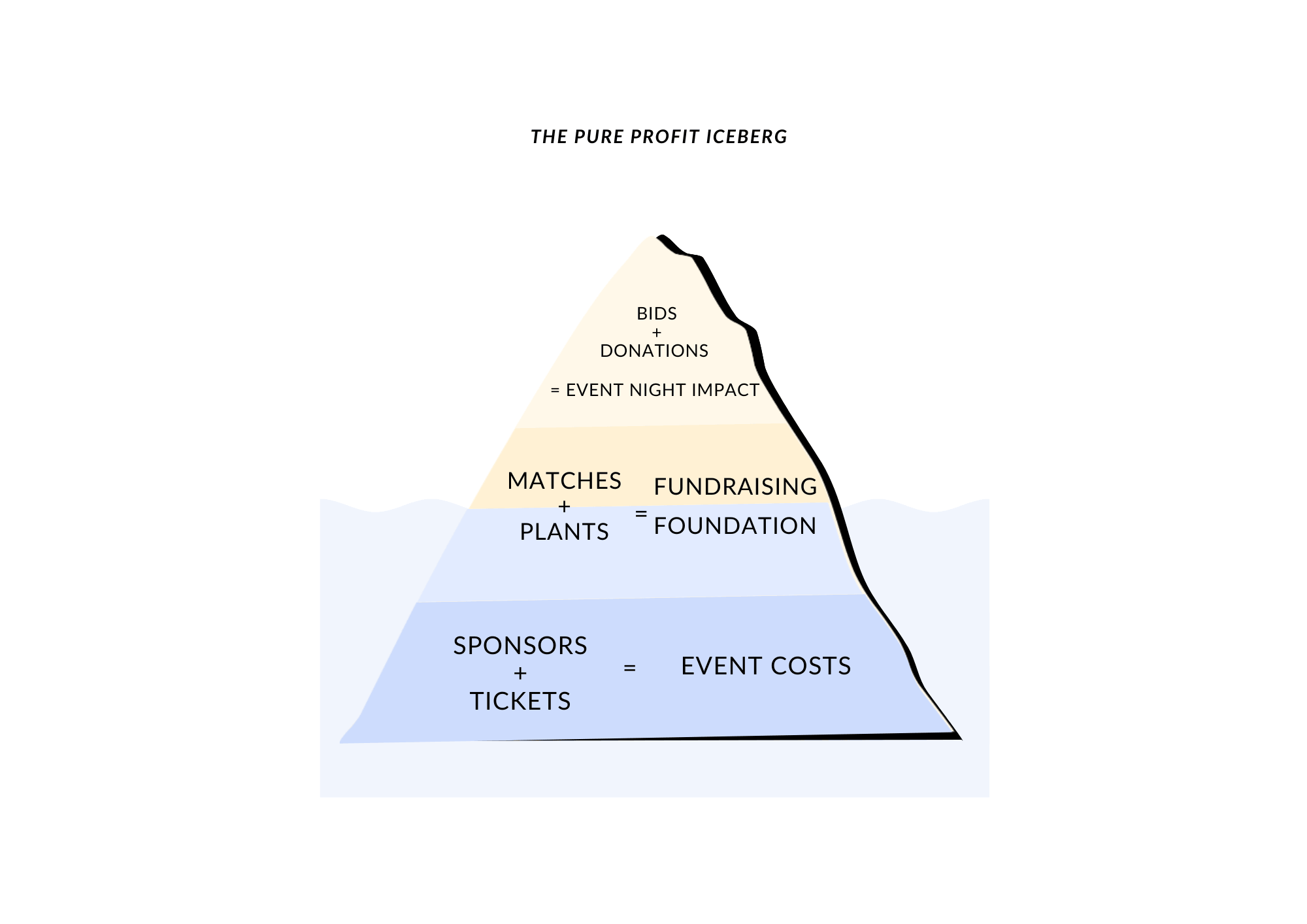
One option is to strengthen what I call The Pure Profit Iceberg.
At the base of the iceberg are ticket sales and sponsorships. Above that is the fundraising foundation, which includes things like paddle raiser plants and matching gifts.
If the ticket price ends up lower than ideal, you can often compensate by building a stronger fundraising foundation.
That might mean:
- Cultivating additional paddle raiser plants
- Securing more matching gifts
- Adding additional sponsors
These strategies won?t fully replace the benefits of a strong ticket price, but they can help ensure the event ROI is still high until you can raise the ticket price.
Don?t Skip the Paddle Raiser
One more piece of this conversation is important.
If you are concerned about inclusivity, the paddle raiser is actually one of the most inclusive fundraising opportunities available.
Because giving levels can go low, every guest in the room can participate at some level. It allows donors with significant capacity to give generously while also welcoming smaller contributions from others who want to support the mission.
That shared moment of generosity often becomes one of the most powerful parts of the entire event.
Gradual Changes Work Best
If raising the ticket price feels daunting, remember that it doesn?t have to happen overnight.
Many successful galas increase their ticket price gradually over time as the event grows and the audience evolves.
Small adjustments year after year can make a significant difference in profitability while still allowing the community to adapt comfortably.
??????Bringing It All Together
Raising your gala ticket price can feel uncomfortable, especially when you care deeply about the people who support your organization. But the choice doesn?t have to be between profitability and inclusivity.
A layered ticket strategy, sponsor-funded tickets, and a strong fundraising foundation can allow you to do both. You can bring the right donors into the room while still honoring the volunteers and community members who make your mission possible. And when those elements work together, your gala becomes not only more inclusive, but far more impactful for the mission you serve.
??If you?d like help thinking through your own ticket pricing strategy, download the Goal Setting and Ticket Price Calculator.