
Just Because You?ve Always Had a Gala Doesn?t Mean You Should
If your board is saying, ?That gala was amazing. Let?s do it again next year,? while your staff is quietly wondering how they?re going to survive another one? you?re not alone.
For many Executive Directors, Development Directors, and gala planners, this is a very real tension. Galas can create momentum, community, visibility, and major fundraising opportunities. They can also take an enormous amount of time and energy to execute well.
And sometimes, the answer isn?t to stop doing a gala. It?s to redesign it.
Tradition Is Not a Fundraising Strategy
A board member or donor saying, ?We should absolutely do this again,? doesn?t automatically mean it?s the right fundraising opportunity for your organization.
If your last gala took hundreds of staff hours and barely broke even, it?s worth slowing down and objectively assessing whether the event truly fits into your fundraising picture.
In many cases, the gala still makes sense. It just needs to be re-engineered in a way that better aligns with your team capacity, donor base, and fundraising goals.
Because a gala isn?t just an event. It?s closer to a part-time job.
Between sponsors, vendors, volunteers, procurement, donor strategy, timelines, decor, catering, speakers, marketing, and the hundreds of tiny decisions involved, these events often move well past the 500-hour mark.
That?s why the math matters.
The Pure Profit Iceberg
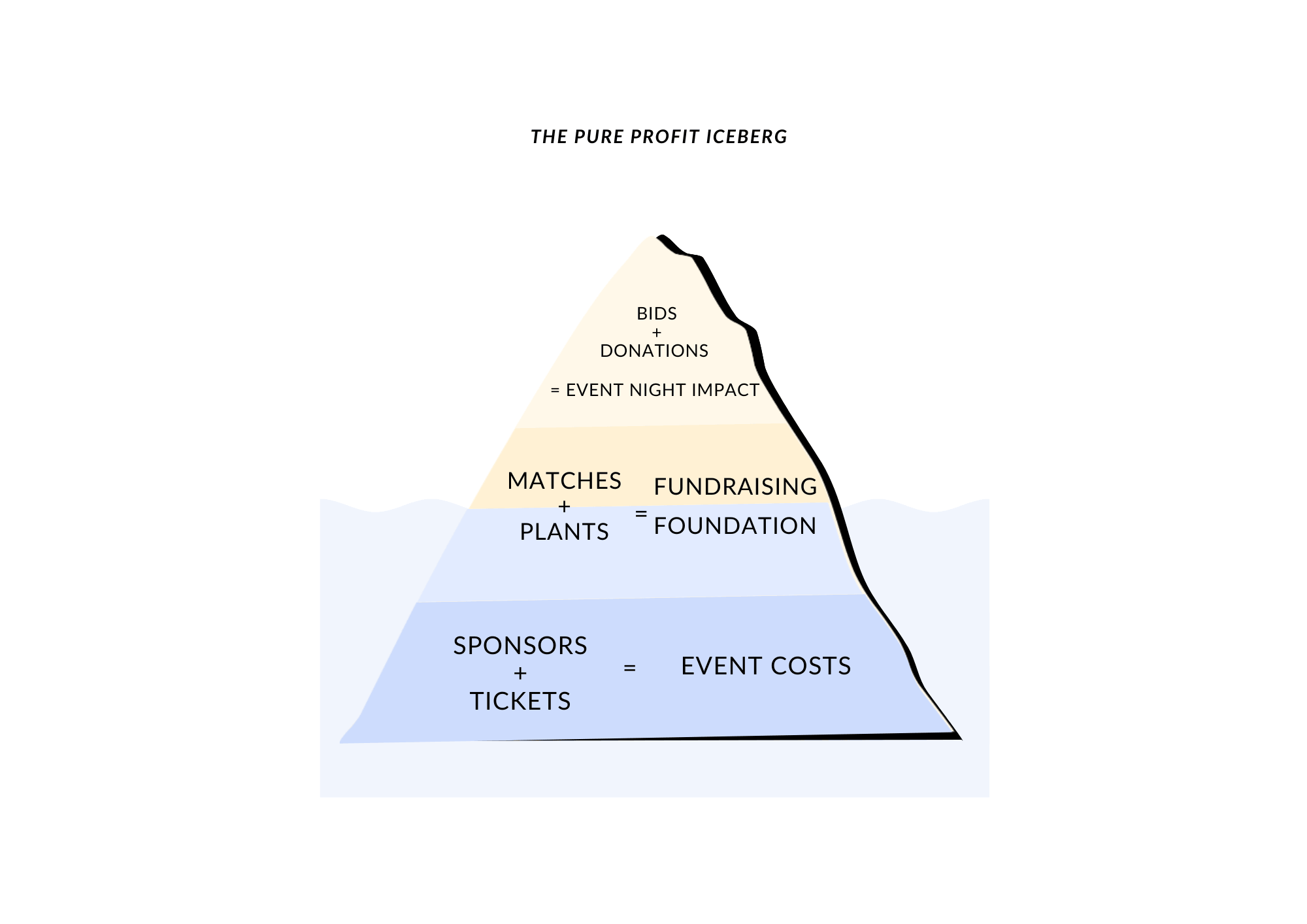
One of the most helpful ways to assess whether a gala is worthwhile is to look at the layers underneath the event itself.
Most guests only see the polished event night experience. What they don?t see is everything happening beneath the surface that determines whether the gala will actually be profitable.
That?s where the Pure Profit Iceberg comes in.
At the foundation, sponsors and ticket sales should more than cover your event costs. That?s what allows the event to start generating true fundraising revenue instead of simply paying for itself.
The next layer is your fundraising foundation. This includes things like plants and matches for your paddle raiser. Those strategic commitments create momentum and confidence in the room long before the event begins.
Then comes event night impact. This is what we raise through your silent auction, live auction, paddle raiser and any additional fundraising games. The success of this hinges upon your individual ticket price being high enough but there are other influencing factors.
Things like:
- The right fundraising packages
- The right number of packages
- A compelling mission moment video
- A strong call to action
- A professional auctioneer
- The right donors in the room
All of those pieces work together to increase fundraising potential.
The key is making sure enough attention is being placed on the layers under the water, not just the visible parts guests experience on event night.
Offense vs. Defense
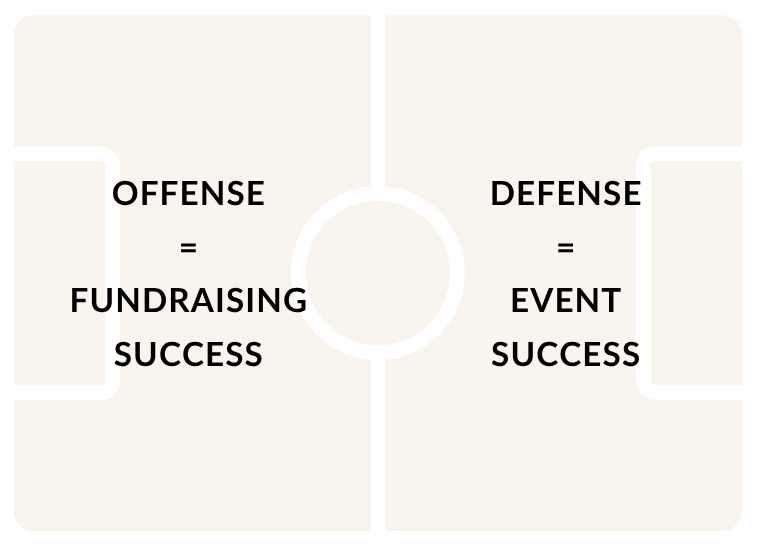
I often compare gala planning to the Super Bowl.
Your annual gala has too much impact and requires too much energy to treat casually. It deserves strategy.
In this framework:
- Offense is fundraising success
- Defense is event planning success
Defense matters. You absolutely want a great guest experience.
But many organizations unintentionally spend the majority of their time on decor, themes, food, bar logistics, and entertainment while the fundraising strategy gets much less attention.
Offense is where the biggest fundraising outcomes happen.
That includes:
- Securing sponsors
- Getting plants and matches
- Procuring the right packages
- Building an emotional mission moment
- Creating a lean, strategic program
- Getting the right people in the room
A profitable gala usually comes from spending the majority of your time and energy on offense.
And the good news is that many defensive logistics can often be delegated, outsourced, or supported by committees, volunteers, and event professionals.
Focus on Your Highest ROI Fundraising Streams
Another important assessment is looking at which fundraising streams actually generated the most return for the amount of time invested.
In most cases, the paddle raiser is still the highest ROI fundraising stream in the room. It?s inclusive, emotionally driven, mission-centered, and scalable.
That?s why many organizations benefit from simplifying the event structure instead of trying to do every possible fundraising activity.
Often, the strongest redesign looks like:
- A heavily prioritized paddle raiser
- Possibly a live auction
- A smaller, curated silent auction
Not every event needs every fundraising stream.
The goal is creating an event that is both impactful and worthwhile for your organization to produce.
Redesign, Don?t Necessarily Repeat
One of the biggest mindset shifts is realizing you don?t have to repeat the exact same gala structure simply because that?s how it?s always been done.
Sometimes the best move is:
- A smaller event
- Higher ticket prices
- Fewer guests with stronger giving capacity
- Fewer fundraising streams
- Simpler logistics
- More intentional donor strategy
In my experience, very few conversations actually end with, ?You should never do a gala again.?
More often, the solution is going back to the basics:
- A great mission moment
- Clear fundraising strategy
- High ROI fundraising streams
- The right people in the room
- Strong sponsorship structure
- Thoughtful planning beneath the surface
That redesign is often what turns a draining gala into a truly profitable and sustainable one.
If you want help running the hard numbers, download the Goal Setting & Ticket Price Calculator. It?ll help you assess ticket pricing, sponsorship goals, and the fundraising structure needed to create a more profitable event moving forward.